Venue & Hospitality
Conference Dates:
Hotel Services & Amenities
- Audio/Visual Equipment Rental.
- Business Center.
- Business Phone Service.
- Complimentary Printing Service.
- Express Mail.
- Fax.
- Meeting Rooms.
- Office Rental.
- Photo Copying Service.
- Secretarial Service.
- Telex.
- Typewriter.
- Video Conference.
- Video Messaging.
- Video Phone.
- ATM.
- Baggage Storage.
Transportation
About City
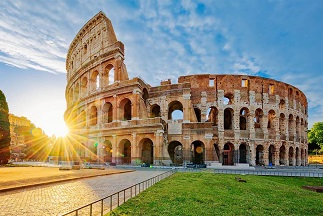
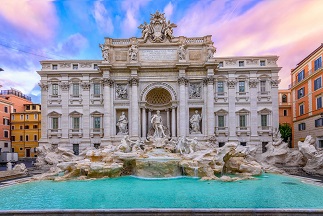
Rome, the capital city of Italy, is one of the most historically and culturally significant cities in the world. Often referred to as the “Eternal City,” Rome has a history that spans more than 2,500 years, making it a living museum of ancient civilization, art, architecture, and culture. Located in the central-western part of the Italian Peninsula, along the Tiber River, Rome serves as both the political capital of Italy and a global center for heritage, religion, and tourism.
The city is best known for its remarkable contribution to Western civilization, particularly as the heart of the Roman Empire. During ancient times, Rome was the center of political power, law, engineering, and military strength. Iconic structures such as the Colosseum, the Roman Forum, and the Pantheon stand today as enduring symbols of Roman architectural brilliance and engineering innovation. These monuments attract millions of visitors each year and reflect the grandeur of a civilization that shaped much of modern Europe and beyond.
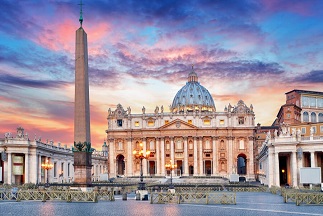
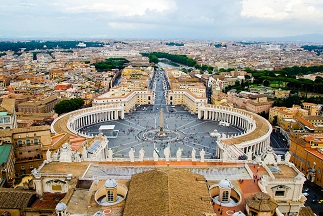
Rome is also the spiritual center of the Roman Catholic Church, as it is home to Vatican City, the smallest independent state in the world. Vatican City houses St. Peter’s Basilica, the Sistine Chapel, and the official residence of the Pope. These sites hold immense religious and artistic significance, drawing pilgrims and tourists from across the globe. The artistic masterpieces of Michelangelo, Raphael, and Bernini found in Vatican City contribute to Rome’s reputation as a global hub of Renaissance art and culture.
In addition to its historical importance, Rome is a modern and vibrant metropolis. It is a major center for politics, education, fashion, and international business in Italy. The city hosts numerous universities, research institutions, and cultural academies, making it a key destination for academic exchange and scientific conferences. Its infrastructure blends ancient landmarks with contemporary urban development, creating a unique landscape where history and modern life coexist.
Rome’s cultural life is rich and diverse, with world-class museums, art galleries, theaters, and music venues. Italian cuisine is also an essential part of the city’s identity, with traditional dishes such as pasta carbonara, cacio e pepe, and Roman-style pizza being enjoyed by locals and visitors alike. The city’s vibrant street life, charming piazzas, and historic neighborhoods such as Trastevere and Monti offer an immersive cultural experience.
Tourism plays a vital role in Rome’s economy. Millions of visitors arrive each year to explore its archaeological sites, religious landmarks, and artistic treasures. The city’s UNESCO World Heritage status highlights its global importance and the need to preserve its cultural and historical heritage.
Rome is also increasingly engaged in addressing modern challenges such as sustainability, urban development, and environmental protection. Efforts are being made to balance preservation of ancient structures with the demands of a growing modern population. Public transport systems, green initiatives, and urban planning projects are continuously evolving to improve the quality of life in the city.
In essence, Rome is a city where the past and present merge seamlessly. Its unmatched historical legacy, artistic excellence, and cultural richness make it one of the most fascinating cities in the world. Whether viewed through the lens of history, religion, art, or modern development, Rome continues to inspire and influence global civilization, truly living up to its title as the Eternal City.